
Zero Trust Alignment
Permguard is designed to align with Zero Trust principles, leveraging the ZTAuth* protocol to provide secure, scalable, and reliable authorization for modern, distributed environments.

Permguard is powerful yet easy to use. Its advanced architecture ensures security and flexibility, while integration remains simple—whether for a basic app or a complex enterprise system. Just run the server, define your policy, and integrate it seamlessly.
Three Core Principles of Zero Trust
There are three fundamental principles that underpin the Zero Trust security model:
Never Trust, Always Verify Every access request, no matter its origin or previous validation, must be verified before access is granted. This ensures that trust is never assumed but continuously validated.
Enforce Least Privilege Access Users, services, and devices should only access the resources needed for their tasks. This reduces the risk of unauthorized actions and potential security breaches.
Assume Breach Design systems with the expectation that a breach can and will happen. This approach ensures strong security measures to limit damage and maintain resilience even if compromised.
In addition to the three core principles, network segmentation is a foundational requirement for advancing Zero Trust security.
By dividing the environment into small, isolated zones—each with its own access controls and enforcement boundaries—you limit lateral movement and ensure that every request is treated as untrusted until explicitly validated.
How Permguard Implements Zero Trust
Permguard adopts the ZTAuth* specification. To understand how this works, let’s compare it to network security:
- ZTNA (Zero Trust Network Access): Secures identity-based access to networks by enforcing least privilege at the network boundary.
- ZTAuth* (Zero Trust Auth*): A Zero Trust compliant protocol for secure, identity-based access at the application edge. It supports eventual consistency and resilient synchronization across network disruptions. Built with a delegation-first model, it is ideal for systems that require secure and auditable delegation.
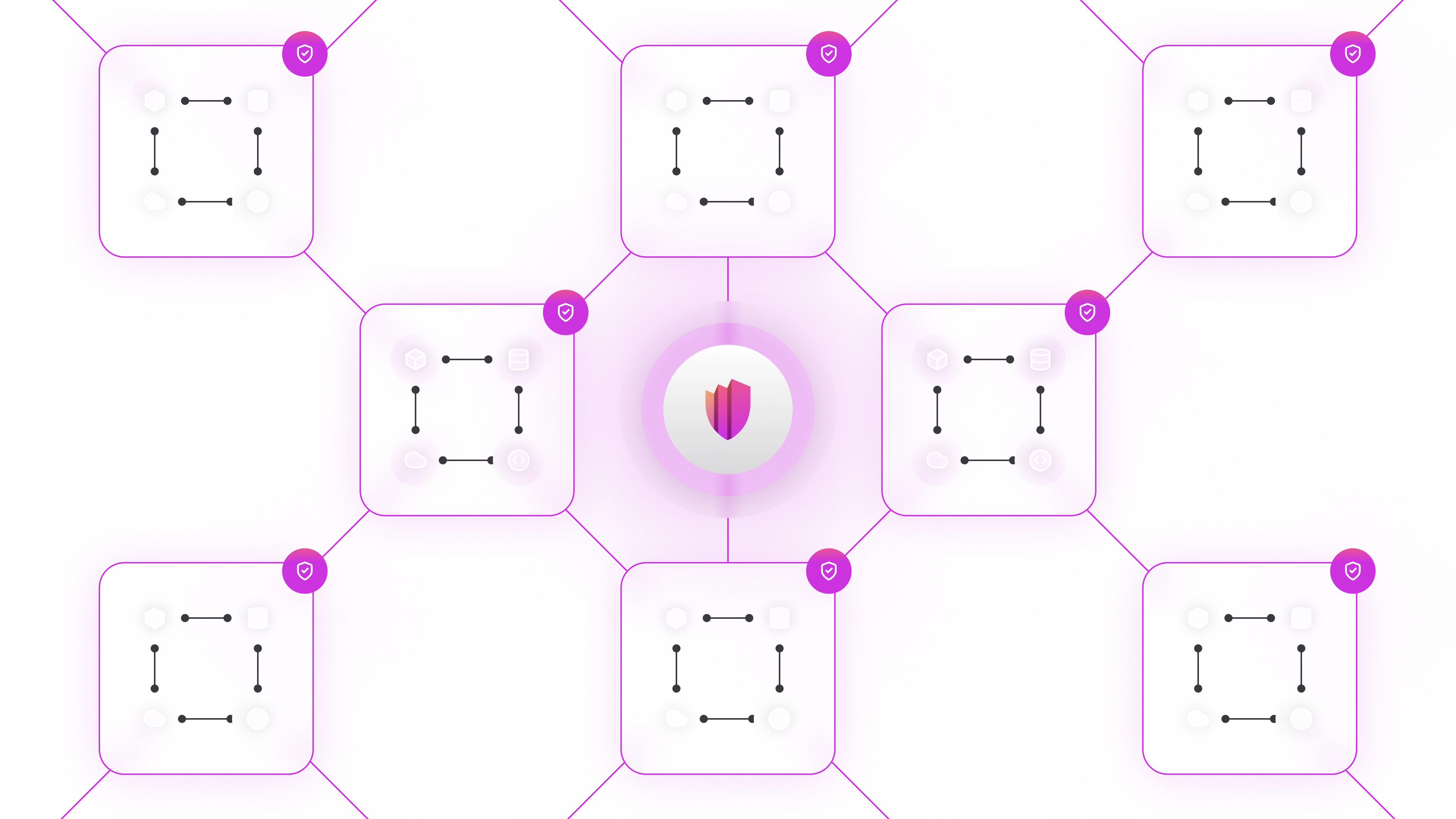
ZTAuth* and Zero Trust Network Access (ZTNA) are not the same:
- ZTNA secures network boundaries, controlling access at the network level
- ZTAuth* protects applications, enforcing detailed access control and ensuring consistent security across all actions and resources.
Asynchronous by Design: Built to match real-world scenarios, not hide them — reliable where synchronous methods fall short.
The Permguard architecture includes administrative services such as:
- Zone Administration Point (ZAP): Manages zones and related configurations
- Policy Administration Point (PAP): Defines and manages policies
- Policy Information Point (PIP): Provides data needed for authorization decisions
- Policy Decision Point (PDP): Evaluates policies and makes decisions
- Policy Enforcement Point (PEP): Enforces the decisions made by the PDP.
ZTAuth* introduces a key difference: it defines Auth* models that can be transferred to data-planes.
These models are incrementally synchronized to zone nodes as git-like commit-based snapshots.
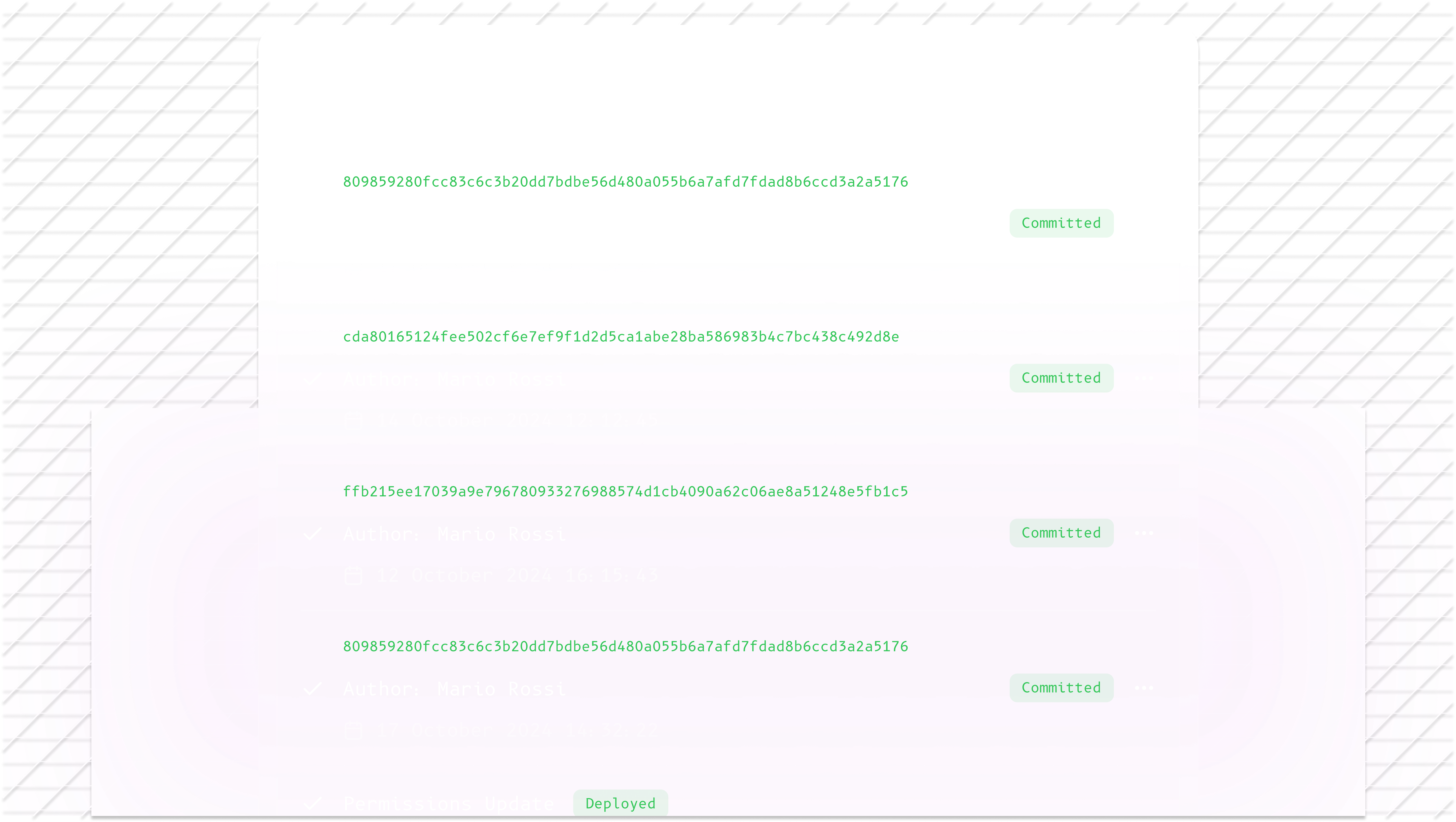
To function properly, these models must have the following characteristics:
- Transferable and Verifiable: Works seamlessly across systems and environments, with verifiable origins certified by the
control-plane. - Versionable and Immutable: Guarantees integrity, auditability, and compatibility with the corresponding model version for secure and reliable operations.
- Resilient to Disconnection: Supports eventual consistency, allowing continued functionality in partially connected or offline environments.
ZTAuth* Architectural Model
The ZTAuth* architectural model defines how trust is established, transported, evaluated, and governed across distributed systems.

This model is composed of five layers that work together to produce verifiable, Zero Trust–aligned authorization decisions:
- Trusted Input — the initial cryptographic material (credentials, tokens, attestations) that identifies who or what is requesting an action.
- Trusted Channel — the communication layer between components. When the channel provides security guarantees such as confidentiality, integrity, and authentication, it is considered
trusted; otherwise, it operates as anuntrustedchannel. - Autonomous Component — the workload executing the action, enforcing decisions close to where they matter.
- Policy Decision Point (PDP) — the data-plane component that evaluates context and policies to compute a permit or deny decision.
- Trust Governance — the control-plane that defines, distributes, and audits policies and trust relationships.
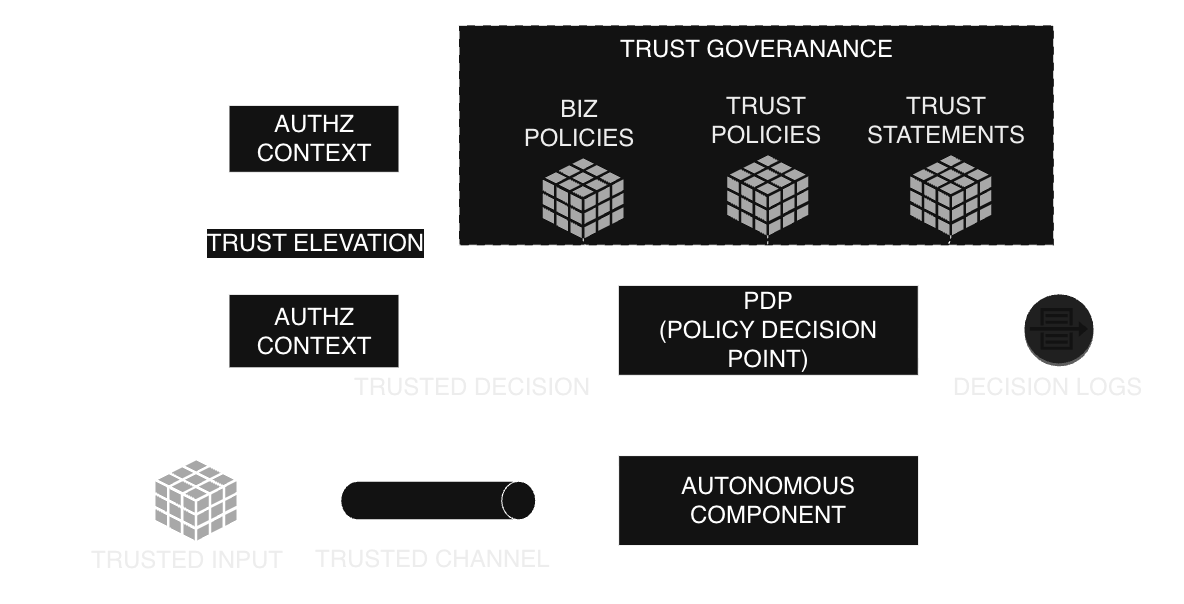
Together, these layers create a unified authorization model where every decision is context-aware, cryptographically verifiable, and aligned with organizational intent, enabling consistent Zero Trust enforcement across both synchronous and asynchronous boundaries.
For additional details and in-depth semantics, you can refer to the full ZTAuth* specification.
With Permguard and ZTAuth*, authorization is no longer just an extra step—it becomes a core part of modern security.